
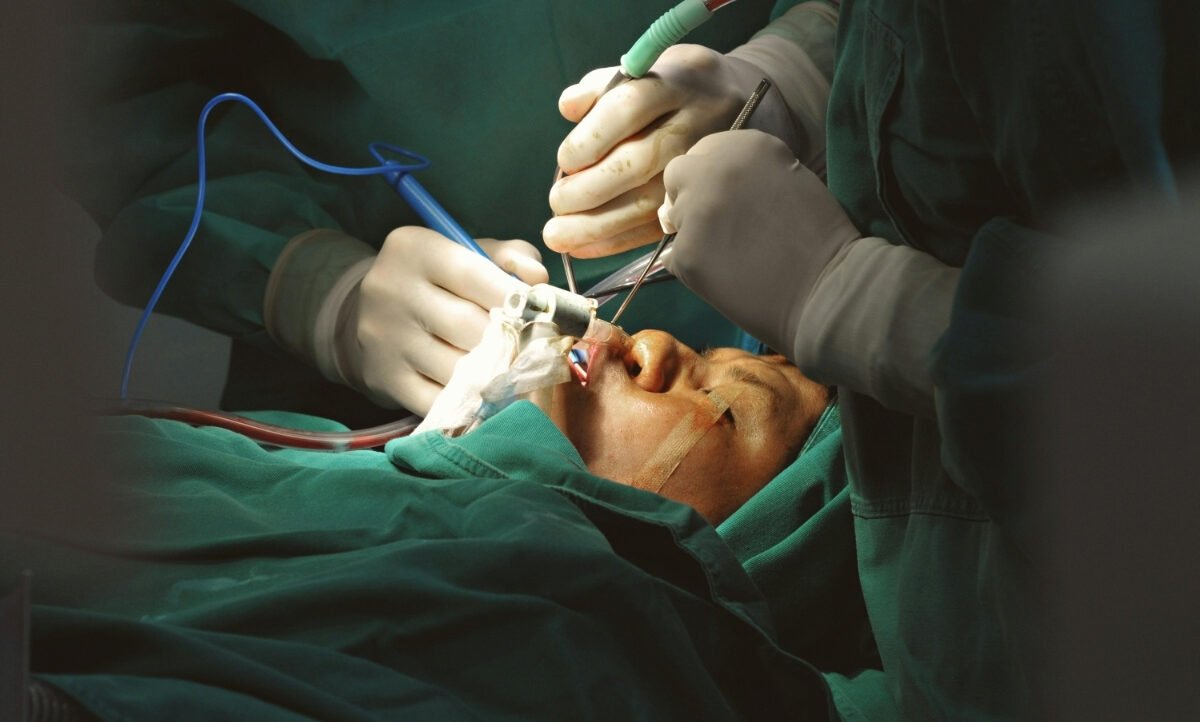
Advanced & Recurrent Head and Neck Cancer Surgery
Advanced and recurrent head and neck cancers are among the most complex oncological conditions to treat. These cancers may involve the oral cavity, tongue, throat, larynx, thyroid, salivary glands, or surrounding structures, and often require highly specialized, multidisciplinary surgical planning. When cancer returns after prior surgery, radiation, or chemotherapy, treatment becomes even more challenging due to scar tissue, altered anatomy, and reduced tissue healing capacity.
At Airavat Cancer Care, we offer advanced and recurrent head and neck cancer surgery with a focus on complete tumor removal, functional preservation, and aesthetic reconstruction. Our approach combines oncologic precision with reconstructive expertise to restore speech, swallowing, breathing, and facial symmetry wherever possible.
What Is Advanced & Recurrent Head and Neck Cancer Surgery?
Advanced and recurrent head and neck cancer surgery refers to highly specialized surgical procedures performed to treat large, locally invasive, or previously treated cancers that arise in the oral cavity, throat, larynx, thyroid, salivary glands, jawbone, or neck region. “Advanced” cancers typically involve deeper tissues, nearby muscles, bones, nerves, or lymph nodes, making their removal more complex. “Recurrent” cancers are those that return after initial treatment such as surgery, radiation therapy, or chemotherapy, and often require more intricate surgical planning due to scar tissue formation and altered anatomy.
This type of surgery is focused on achieving complete tumor removal while carefully preserving or reconstructing vital functions such as speech, swallowing, breathing, and facial structure. Because these cases are more technically demanding, they require detailed preoperative evaluation, advanced surgical expertise, and coordination between oncologic and reconstructive teams. The ultimate goal is not only cancer control but also restoration of function and quality of life.
Instant Business Growth
Marketing Strategy
Social Media Marketing
Strategy of Brands
Conditions Commonly Treated
We manage advanced and recurrent cases involving:
Each case is discussed in a multidisciplinary tumor board to create a personalized surgical and post-treatment plan.
Treatment Approach
Management of advanced and recurrent head and neck cancer begins with comprehensive clinical assessment and advanced imaging to determine the exact extent of disease. Surgery often involves radical tumor resection, where all cancerous tissue including involved muscles, soft tissue, bone, or lymph nodes is carefully removed to ensure complete clearance. In cases where cancer has invaded the jawbone, composite resection may be performed to remove the affected segment while preparing for reconstruction.
For recurrent disease, salvage surgery offers an important opportunity for cure when other treatments have failed. Neck dissection is frequently performed alongside tumor removal to eliminate cancer-affected lymph nodes and reduce the risk of further spread. When airway compromise is anticipated, procedures such as tracheostomy may be performed to secure safe breathing during recovery.
Reconstruction plays a critical role in these surgeries. Microvascular free flap techniques allow transplantation of healthy tissue from another part of the body to rebuild structures removed during cancer surgery. This helps restore both appearance and essential functions such as chewing, swallowing, and speech. Depending on pathology findings, postoperative radiation or chemotherapy may be recommended to reduce recurrence risk and improve long-term outcomes.
Advanced Surgical Expertise, Recovery & Rehabilitation
Surgery for advanced or recurrent head and neck cancer requires meticulous planning, particularly when patients have previously undergone radiation therapy. Scar tissue, compromised blood supply, and altered anatomy make these procedures technically complex and high-risk. Our team prioritizes:
Recovery timelines vary depending on the extent of surgery and reconstruction. With structured postoperative care and rehabilitation, many patients regain significant functional independence.

Why Choose Airavat Cancer Care for Advanced Head & Neck Cancer Surgery?
1. Highly Specialized Surgical Expertise
2. Multidisciplinary Tumor Board Approach
3. Integrated Reconstructive Surgery
4. Comprehensive Rehabilitation Support
5. Personalized Long-Term Follow-Up
Frequently Asked Questions
Can recurrent head and neck cancer be cured?
How risky is surgery after radiation therapy?
Will I lose my ability to speak or swallow?
How long does recovery take after advanced head and neck surgery?
What are the signs of recurrence I should watch for?
If you or your loved one has been diagnosed with advanced or returning head and neck cancer, early specialist evaluation can significantly improve outcomes.