
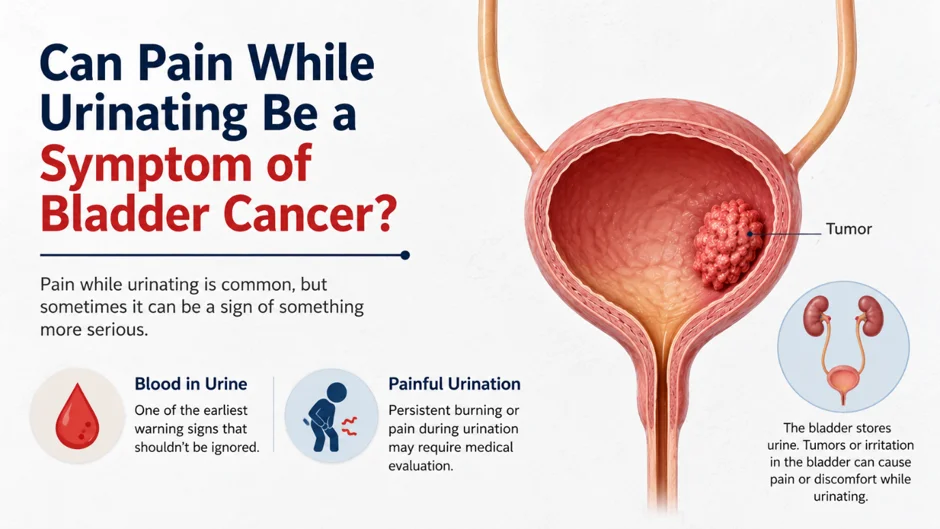
Can Pain While Urinating Be a Symptom of Bladder Cancer?
Pain while urinating is one of those symptoms that immediately gets a person’s attention. For most people, it turns out to be something minor and easily treated. But for others, especially when the discomfort doesn’t go away or keeps coming back, it raises a more serious question: can pain while urinating be a symptom of bladder cancer?
It’s a fair question to ask, and an important one. While painful urination is far more often linked to infections or other common conditions, it can, in some cases, point toward something that needs closer investigation. Knowing the difference can help you decide when to simply monitor things and when to see a doctor.
What Does Painful Urination Actually Mean?
Doctors use the term dysuria to describe pain, burning, or discomfort during urination. It can feel like a sharp sting, a dull ache, or a burning sensation, and it may occur at the start, during, or right after you urinate. On its own, dysuria is a symptom, not a diagnosis. The cause behind it is what really matters.
Can Bladder Cancer Cause Pain While Urinating?
Yes, it can, though it’s typically not the first or only sign. Bladder cancer often begins quietly, with blood in the urine usually being the earliest noticeable symptom. Pain tends to appear as the disease progresses or when a tumor starts to irritate the bladder lining.
How Bladder Tumors Lead to Discomfort
As a tumor grows on the inner wall of the bladder, it can interfere with how the bladder fills and empties. This irritation can trigger a burning sensation similar to what you’d feel with a urinary tract infection, which is part of why bladder cancer is sometimes mistaken for a routine infection at first.
Inflammation of the Bladder Lining
Tumors can cause the surrounding tissue to become inflamed. This inflammation makes the bladder more sensitive, so even small amounts of urine can trigger discomfort or an urgent need to go.
Blood in the Urine and Its Connection to Pain
Blood in the urine, known medically as hematuria, is closely tied to bladder cancer. Sometimes this blood is visible; other times it’s only detected through a lab test. When blood and pain show up together, it’s a combination doctors take seriously and investigate promptly.
Is Painful Urination Always a Sign of Bladder Cancer?
Not at all, and this is worth keeping in mind. Urinary tract infections are by far the most common cause of painful urination, particularly in women. Kidney stones, and prostate conditions in men can also cause similar discomfort. Bladder cancer is a much less common explanation.
That said, if the pain lingers beyond a typical infection, keeps returning, or shows up alongside blood in the urine, it deserves proper evaluation rather than being brushed aside. Early attention makes a real difference in how manageable treatment turns out to be.
How Is Bladder Cancer Diagnosed?
If your doctor suspects something beyond a simple infection, they may recommend:
- Urine cytology to check for abnormal cells in a urine sample
- Cystoscopy, where a thin scope is used to view the inside of the bladder directly
- CT urogram or imaging scans to get a detailed look at the urinary tract
- Biopsy to confirm whether a growth is cancerous
What Are the Treatment Options?
Treatment depends on how advanced the cancer is at diagnosis, but common approaches include:
- TURBT (transurethral resection of bladder tumor) to remove tumors through minimally invasive surgery
- Intravesical therapy, where medication is delivered directly into the bladder
- Chemotherapy or radiation for more advanced cases
- Cystectomy, or surgical removal of part or all of the bladder, is necessary when
Your care team will guide you toward the option best suited to your specific diagnosis and overall health.
Can Bladder Cancer Be Prevented?
While there’s no guaranteed way to prevent it, certain habits can lower your risk:
- Avoiding tobacco use, since smoking is the single biggest risk factor
- Staying well hydrated to help flush the bladder regularly
- Limiting exposure to certain industrial chemicals when possible
- Attending regular checkups, especially if you notice recurring urinary symptoms
Taking Urinary Symptoms Seriously, Without the Worry
Painful urination is usually nothing to panic about, but it’s also not something to ignore, particularly when it persists or comes with other warning signs like blood in the urine. Listening to your body and getting timely answers is one of the most protective things you can do for your health.
If you’ve been dealing with unexplained urinary pain or discomfort that just won’t settle, don’t wait it out. The team at Airavat Cancer Care is here to help you get a clear, accurate diagnosis and a treatment plan built around your needs. Reach out to schedule a consultation and take the first step toward peace of mind.